 Epaper
In the heart of Nepal, where the mountains meet the earth in a timeless embrace, a family struggled to survive. Amir Maharjan, the second of three brothers who would later build Classic Diamond, remembers a time of hardship when their lives were defined by poverty, uncertainty, and the fight for survival.
Amir’s father worked diligently as a gardener at the German Embassy in Kathmandu, yet the family struggled to make ends meet. With five siblings depending on their father’s income, even basic needs like food and clothing were daily challenges.
Despite the dire situation, Amir’s father found a measure of stability and respect in his work. He was employed for over five years by Mr. Bishnu Bhakta (Bal Ram Bhakta) Mathema, affectionately known as Kaaji Saab.
“Kaaji Saab truly loved my father,” Amir recalls. “He knew how hard my dad worked, and despite our struggles, he always treated him with great respect and care.”
But the future seemed grim. Amir’s father was diagnosed with tuberculosis (TB), a disease that was virtually a death sentence in Nepal at the time. With little hope for treatment in the country, the situation became even more critical.
“I was only two years old, and my youngest brother had just been born. We were five kids, and the thought of losing our father was unbearable,” Amir says.
A Lifeline to Hong Kong
Facing this crisis, Kaaji Saab made an extraordinary decision. Realizing that the only way for Amir’s father to survive was to seek medical help abroad, he arranged for him to work as a household helper in Hong Kong. It was a desperate yet hopeful solution to the family’s suffering.
Amir’s father was sent to live with Mr. Bipin Choksi, an Indian diamond trader based in Hong Kong. He began his new life with little more than the hope that he could recover and send money back to his family. He earned Rs. 800 INR a month as a domestic helper.
When Amir’s father arrived in Hong Kong, it didn’t take long for Mr. Choksi and his wife to realize that something was terribly wrong. His illness, TB, became apparent, and they initially tried to send him back to Nepal. However, after understanding the dire situation and its impact on the family, Mrs. Choksi, a woman of deep compassion, took matters into her own hands.
“She was like an angel to my father,” Amir says. “Her name, Karuna, truly fit her nature. She believed in the power of humanitarian care—that healing wasn’t just physical but emotional, too.”
Karuna Auntie, as she came to be known in the family, cared for Amir’s father as if he were her own family member. From providing nourishing food to ensuring he received the best possible treatment, she was there every step of the way. Her love and care helped Amir’s father recover quickly—a recovery that was nothing short of miraculous.
“If it wasn’t for her, we wouldn’t be here today. We owe so much to her,” Amir reflects, his gratitude evident in his voice.
The Spark of a New Dream
Once Amir’s father had fully recovered, he bonded closely with the Choksi family. He became part of their household and, over time, gained a deep understanding of the world of diamonds. Though his initial role was as a domestic helper, his curiosity grew, and he soon realized that diamonds were much more than just valuable stones—they were an industry unto themselves.
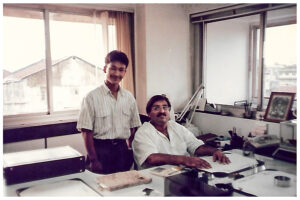
Recognizing the opportunities this world could offer, Amir’s father called his eldest son, Babu Raja (the second child in the family), to Hong Kong. Initially, Babu Raja worked as an office boy and gatekeeper at Sagar Corporation, a diamond industry site holder. After three long years of hard work, his passion and the trust he earned from Mr. Gidhar Lal Zaveri, the owner of Sagar Corporation, opened doors to greater opportunities.
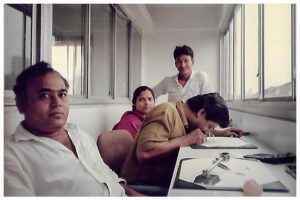
As Babu Raja learned more about the diamond trade, he became increasingly fascinated by diamond assorting, trading, and the strategic aspects of the business. He understood that the world of diamonds was vast and full of potential—something that could change his family’s future. In this transition, he called his brother-in-law, Ramesh Maharjan, to Hong Kong as a domestic helper in a diamond company owned by Mr. Ashok Patel. Babu Raja treated Ramesh as a close friend, envisioning him as a potential business partner alongside Amir. This was the beginning of a master plan that would later lead to the creation of BR Gems, RB Diamonds, and Classic Diamond—three synonymous names in Nepal’s diamond industry, all the brainchild of Babu Raja Maharjan.
A Brother’s Vision
Babu Raja was determined that his younger brothers would not face the same hardships he had endured. He set his sights on a new goal: to give his brothers a better life, one that wasn’t confined to the limitations of domestic work.
“I didn’t want my brothers to follow in my footsteps as domestic helpers. I wanted more for them,” says Babu Raja. “I wanted them to have a place in the diamond world, not just as helpers, but as professionals.”
With this in mind, Babu Raja decided to send Amir to Bombay (now Mumbai) at the age of 17. Through his connections in Hong Kong, he arranged for Amir to work and learn in a diamond business house called Chandrakant & Co. This would be Amir’s first real exposure to the diamond industry, a crucial step in the journey toward building Classic Diamond.
“At 17, I was sent to Bombay to learn about diamonds—to work, to understand the intricacies of the trade. It was a huge leap, but one that was necessary for all of us.”
The Year of Transformation: A Journey from Fear to Determination
The year was 1990, a time of both challenge and change for Amir Maharjan. Though the Maharjan family had a small home—just 1 anna of land—they had a sense of security. With the love and support of his family, Amir felt sheltered from the world. However, that sense of comfort was about to be tested in a way that would change the course of his life forever.
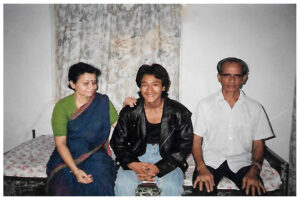
“My brother Babu Raja loved me and my younger brother Samir deeply,” Amir recalls with fondness. “Even though we were poor, he would send me money, clothes, and gifts from Hong Kong. I felt spoiled by his love.”
But despite the warmth of his brother’s affection, Amir was about to embark on a journey that would be far from easy. At just 17 years old, he was sent to Mumbai, India, to learn about the diamond trade. It was a leap of faith—one driven by his brother’s belief that Amir deserved more than a life of struggle. Little did Amir know that his first day in Mumbai would challenge everything he had ever known.
A Harsh Reality
The day Amir arrived in the Chal (a low-income area) of Mumbai, where he was to stay and work, was a brutal awakening. He had left behind the love and care of his family and arrived in a new city, overwhelmed by the conditions of the place he would now call home.
“It was the worst day of my life,” Amir remembers. “The room was small and filthy. The bathroom was outside in the open, in such bad condition that I couldn’t even bring myself to eat, fearing the need to use it.”
The dismal conditions shook Amir to his core. The uncertainty of his situation, the unfamiliar city, and the harsh environment left him feeling like he couldn’t survive.
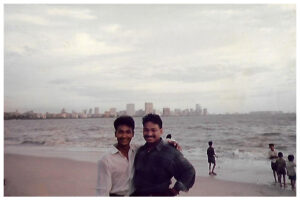
“At that moment, I felt like I couldn’t take it. I thought I might never make it through.”
But amid the challenges, there was something inside him that refused to give up. He had come to Mumbai to learn and to change his life—to step into the world of diamonds. The drive to succeed, to live up to his brother’s sacrifices, became the fuel that kept him going.
The Turning Point
Determined not to let the situation defeat him, Amir quickly found a paying guest arrangement and left the uncomfortable living conditions behind. He focused entirely on his work, determined to prove that he could succeed, no matter how difficult things became.
“I knew that if I wanted to make a difference, I had to commit myself fully. I was there to learn, and I would do whatever it took to succeed,” Amir says.
Within his first month in Mumbai, Amir learned the basics of diamond assorting, a critical skill in the diamond trade. He was immersed in the world of diamonds—their shapes, sizes, and how they were valued.
His hard work paid off when he received an opportunity to work in the office of Bipin Uncle’s son, Mr. Anish Choksi, in Mumbai (Brillimpex Export). This was a significant step forward in his journey.
“I knew I had to start somewhere. The office of Bipin Uncle’s son, Anish Choksi, was where I could gain more experience and exposure. It was my chance to prove that I belonged in the diamond world.”
Amir lived in that office for over three years, sleeping on the floor with just a small mat, a pillow, and a thin blanket. Cleaning the office was also part of his morning duties.
A New Beginning

From that point on, Amir’s journey in the diamond industry began to take shape. The initial struggles—the fear, the loneliness, and the discomfort—all became stepping stones on the path to success. What started as a dire situation transformed into an opportunity for growth, learning, and eventually, a career that would change his life forever.
“Looking back, those early days were the hardest, but they also laid the foundation for everything that came after. I knew it wasn’t going to be easy, but I was willing to work hard and make it work.”
Amir’s journey took another monumental turn as he continued to carve out his place in the world of diamonds. His time in Mumbai was a period of immense growth, both professionally and personally. Not only did he excel in his work, but he also formed bonds of trust and respect that would shape his future in the diamond business.
“I did a good job there,” Amir reflects. “Anish Bhai trusted me completely. He even gave me the key to his safe, something that symbolized the level of responsibility he entrusted me with.”
Amir’s dedication didn’t go unnoticed. Anish Bhai, a key figure in Amir’s early career, saw potential in him and wanted to give him an incredible opportunity. A Japanese client named Mr. Kobey was particularly impressed with Amir’s work and even offered to pay for all his expenses to bring him to Japan. Mr. Kobey wanted Amir to work in Japan and even sent him to Japanese language classes to prepare for the transition. Amir was on the verge of a dream come true.
“I had dreamed of going to Japan. I knew it would be a great opportunity with better income. I was determined to make it happen,” Amir says. “I worked hard, even sleeping in the office, to make sure I was prepared. I was the first in my Japanese class, and I felt so close to achieving my dream.”
However, life had a different plan. Despite Amir’s preparation, Anish Bhai didn’t want to let him go. The bond of trust and the quality of Amir’s work had grown so strong that Anish Bhai couldn’t bear to lose him. Instead of sending Amir to Japan, he asked him to manage a new factory he was setting up.
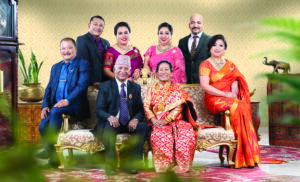
“Anish Bhai wanted me to set up and take care of his new factory (CG International). He believed in me so much, and I promised to make it fully functional within a year,” Amir explains. “I took 40-plus Nepalese workers, including my younger brother Samir, and together, we set up the factory. It was hard work, but we made it happen.”
Once the factory was up and running, Amir returned to Nepal, leaving Samir in Mumbai to manage the factory. The story of Samir’s hardship and struggle is another chapter entirely, one that will be shared in another episode.

The Struggles in Nepal: A Test of Resilience
Amir’s return to Nepal was filled with both hope and uncertainty. Armed with 15 diamond rings from Mumbai, he was ready to launch his own business. Anish Bhai had connected Amir with Mr. Nikhil Rana, who had guaranteed the sale of the rings. Amir traveled to Nepal via Gorakhpur by train, eager to start his new venture.
However, the reality of the Nepali market proved to be far more difficult than Amir had anticipated.
“When I arrived in Nepal, nobody was buying my rings. A few close friends and family took four rings, but some even took them and never paid. It was a huge blow to my confidence,” Amir remembers. “For over a month, I couldn’t sell a single ring. It was completely demotivating.”
Despite these setbacks, Amir refused to give up. He believed that every failure was a stepping stone toward greater success. It was during this challenging period that he met Bhai Kaji Bajracharya, a crucial figure in the story of Classic Diamond.
A New Beginning: The Birth of Classic Diamond
Amir met Bhai Kaji Dai and showed him the rings. While Kaji Dai wasn’t interested in buying them, he offered a glimmer of hope. He said, “I can’t buy the rings, but if you bring me diamonds, I will buy as many as you bring.”
Inspired by this new possibility, Amir returned to Mumbai with the remaining 11 rings. He struggled to pay off the cost of the four unsold rings, but with his savings, financial support from his brother in Hong Kong, and relentless hard work, he managed to settle the debt within three months.
Finally, after months of sacrifice, Amir returned to Anish Bhai, requesting loose diamonds. Anish Bhai provided him with 13 carats of diamonds, and Amir took them to Nepal.
He went straight to Bhai Kaji Dai, who kept his promise and bought all the diamonds for cash. This was the moment that changed everything.
“This was the turning point,” Amir reflects. “It was the moment I found my path. It was the beginning of Classic Diamond.”

The Foundation of Classic Diamond
The motivation and foundation of Classic Diamond were built on this pivotal moment. Amir had faced countless obstacles—from the rejection of his rings to the struggles of establishing himself in Nepal—but this was where the seeds of a successful diamond business were planted.
“It wasn’t easy,” Amir says. “But every challenge, every failure, led me to this point. With Bhai Kaji Dai’s trust and my hard work, I was able to establish the foundation of Classic Diamond. This was the first real step toward building something that would last.”
The story of Classic Diamond did not begin in the glittering world of high-end jewelry but in the sweat and determination of a young man who refused to give up on his dreams. It was built on relationships, trust, and an unwavering belief in the future.
The Turning Point:
Building a Foundation for Growth
After the initial breakthrough in Nepal’s diamond market, Amir’s journey reached another pivotal moment. His elder brother, Babu Raja, expressed a desire to return to Nepal from Hong Kong and asked Amir whether it was time to reunite as a family.
“My brother wanted to come back home,” Amir recalls. “But I had to be honest with him. At that time, diamond awareness in Nepal was still very low. I told him that we didn’t yet have enough work or opportunities to support all of us at once. I suggested we come back gradually, one by one.”
Understanding Amir’s caution, Babu Raja agreed and decided to send their brother-in-law, Ramesh, first to help build the business in Nepal. Together, they began working tirelessly to market diamonds, slowly introducing Nepalis to the brilliance and value of these precious stones.
The First Major Sale: A Game-Changer
Their efforts paid off when BR Gems, their budding business, achieved its first significant milestone. Mr. Tej Ratna Shakya, a respected client, became their first major buyer, purchasing diamonds worth one million rupees—and paying in cash.
“I still remember that moment vividly,” Amir says with pride. “I had never seen that much money at once in my life. It wasn’t just about the sale; it was the motivation and confidence it gave me. That was the moment I realized that the diamond market in Nepal had potential, and with hard work, it could grow.”
This sale wasn’t just a transaction; it was a turning point that transformed their perception of what was possible. For the first time, Amir and his team saw the dream of establishing themselves as genuine diamond traders in Nepal become a tangible reality.
They purchased an Escort Rajdoot motorcycle, which became a crucial asset for reaching potential clients and expanding their business network across Kathmandu and beyond. The business moved out of informal settings and into a small but proper office, signaling their evolution into a professional diamond trading company.
The Rise of Manufacturing and the Birth of Classic Diamond
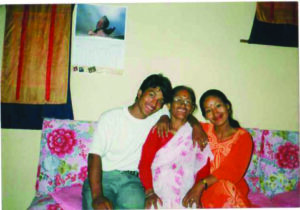
With the diamond business flourishing, the team recognized a significant gap in Nepal’s market: the lack of local manufacturing for diamond jewelry. Until then, Nepal’s elite and wealthy families would travel to India to purchase their diamond pieces.
“We realized that if we could provide high-quality diamond jewelry locally, we could not only meet the demand but also reduce dependence on foreign markets,” Amir recalls.
In 1996, the family took a bold step and established a factory for producing diamond jewelry in Nepal, becoming pioneers in the local manufacturing scene. This strategic move allowed them to cater directly to their growing clientele in Nepal while maintaining control over quality and craftsmanship.
A Family Reunited
By 1997, with the business more stable and opportunities growing, Amir’s father and elder brother, Babu Raja, returned to Nepal. Their return marked a new chapter for the family’s involvement in the diamond business. Together, they established their first showroom under the name RB Diamonds, located in Ranjana Galli, one of Kathmandu’s bustling commercial hubs.
The roles were clearly divided: Ramesh Dai led the marketing efforts, bringing in clients and expanding the customer base. Amir focused on purchasing and sourcing diamonds, ensuring the highest quality for their jewelry. Babu Raja Dai managed overall operations and administrative tasks.
Conflict and a New Beginning
Every success comes at a price.
Despite the initial huge success of RB Diamonds, tensions arose within the business. Amir recalls:
“We had a small conflict with Ramesh Dai about the direction of the business. My brother didn’t want the tension to escalate, so he promptly decided to let go of RB Diamonds. It was a challenging time, but we all respected each other deeply.”
Ultimately, Ramesh Dai decided to part ways with the showroom. In an extraordinary gesture of generosity and humility, Babu Raja Dai handed over all the assets of RB Diamonds to Ramesh Dai. He even shouldered a 50-million-rupee loan and left the business behind to start anew.
“That’s just the kind of person my brother is,” Amir says with admiration. “He’s a man with a truly golden heart.”
Babu Raja Dai, in his spirit of fairness, decided not to establish any new showrooms for two years, respecting RB Diamonds and ensuring no direct competition. However, Amir convinced him to retain their factory, as it was essential for paying off the massive 50-million-rupee loan and securing their future.
The Birth of Classic Diamond
After two years of silence, Classic Diamond was born—a new venture reflecting the family’s resilience and vision for the future. By this time, the business had expanded its horizons, exporting diamond jewelry to the USA and other markets.
3kg Gold in a Soak Pit
During a financial crisis, an Indian technician suggested extracting gold from factory waste. To their astonishment, they recovered three kilograms of gold. This unexpected treasure became a significant asset, forming the foundation of Classic Diamond.
Amir Man and his sister, Nani Chori Maharjan, secretly began crafting jewelry from the extracted gold. Their covert efforts culminated in the opening of a showroom in Pulchowk. This secret mission was not just about starting a new business—it was a determined effort to bring their family and enterprise back on track.
Building the Brand
Inspired by a Mumbai marketing strategy, Amir used newspaper flyers for the grand opening of Classic Diamonds in Nepal, which turned out to be a game-changer. The tagline “If it’s a wedding, it has to be Classic” captured the brand’s essence.
Through branding efforts like the Timeless Paragon Jewellery Fashion Show (TPJFS), Classic Diamonds solidified its market position, becoming synonymous with trust and quality.
The Legacy of Classic Diamonds
From humble beginnings to becoming Nepal’s most trusted diamond brand, Classic Diamonds is a testament to resilience, innovation, and commitment to excellence. More than a business, it represents relationships, memories, and aspirations—shining as a symbol of Nepal’s growing elegance and sophistication.
प्रकाशित मिति : २०८१ फाल्गुन १७, शनिबार गते